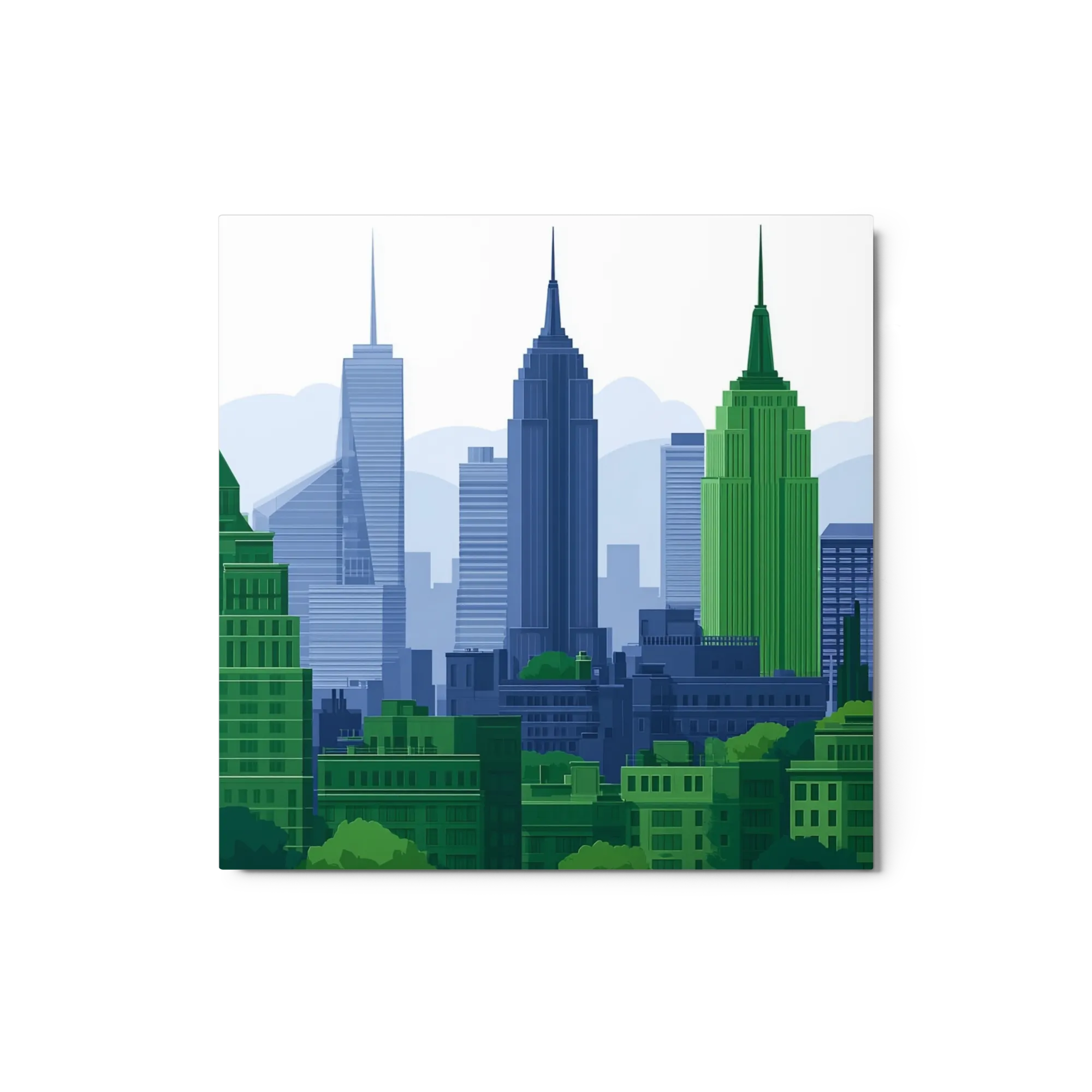
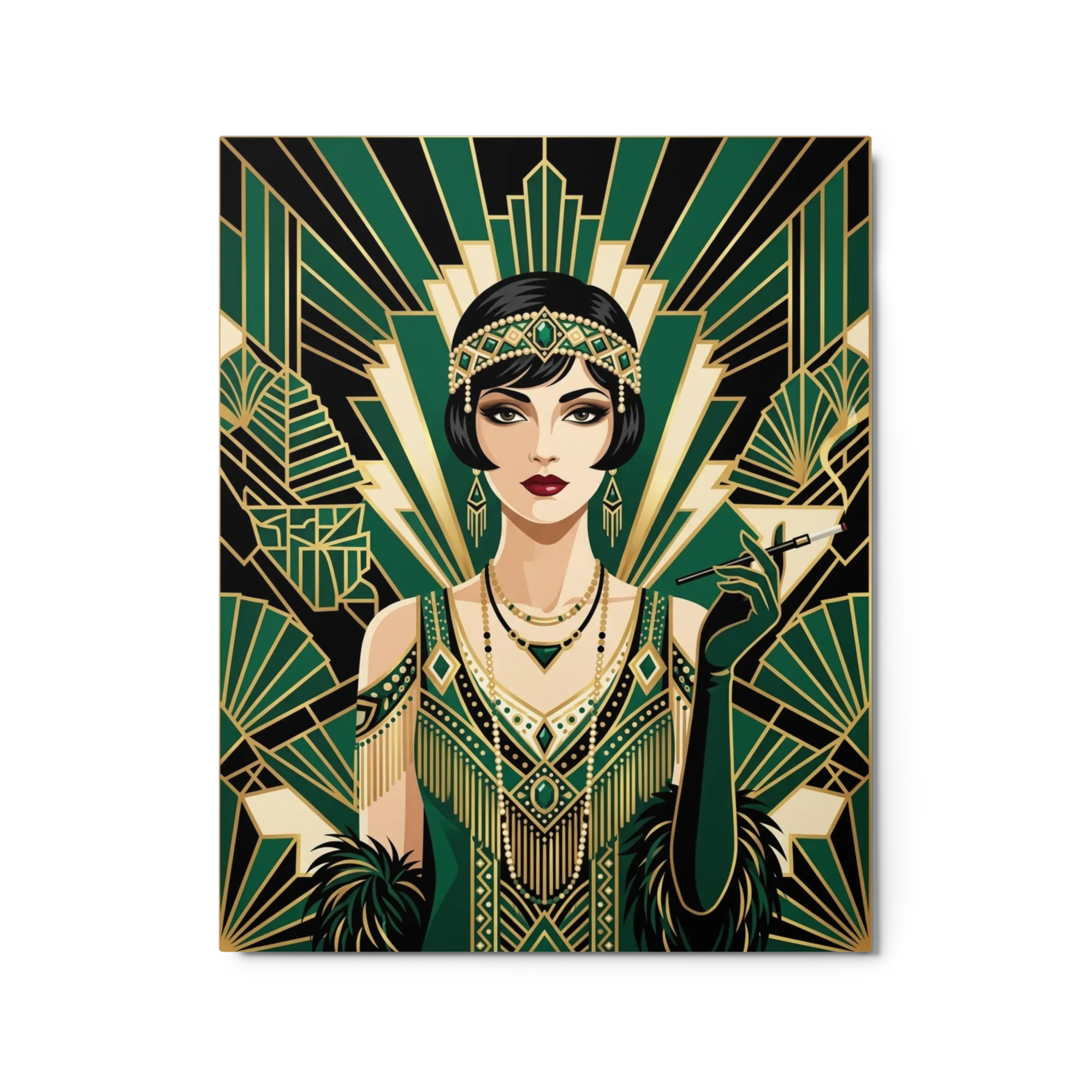
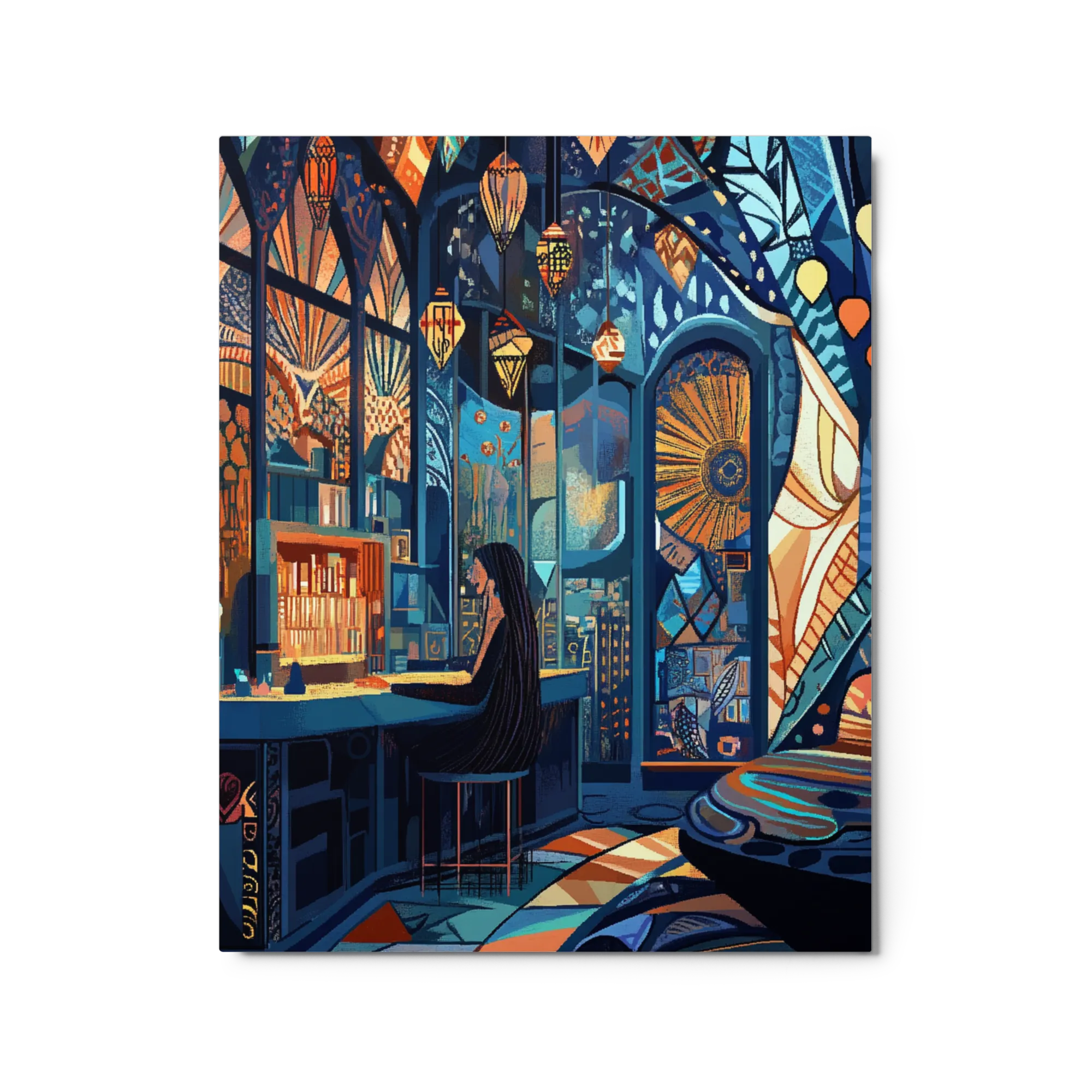
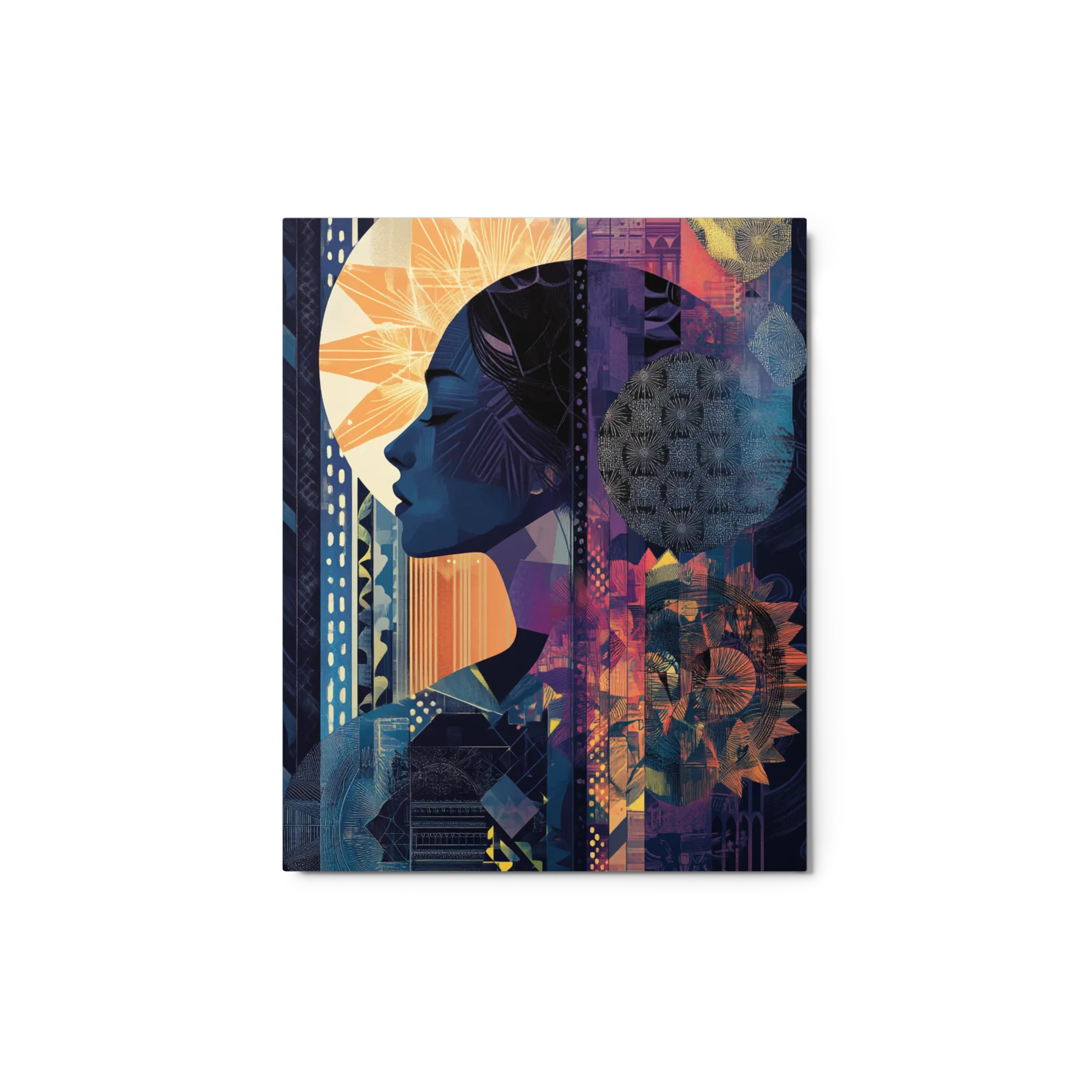
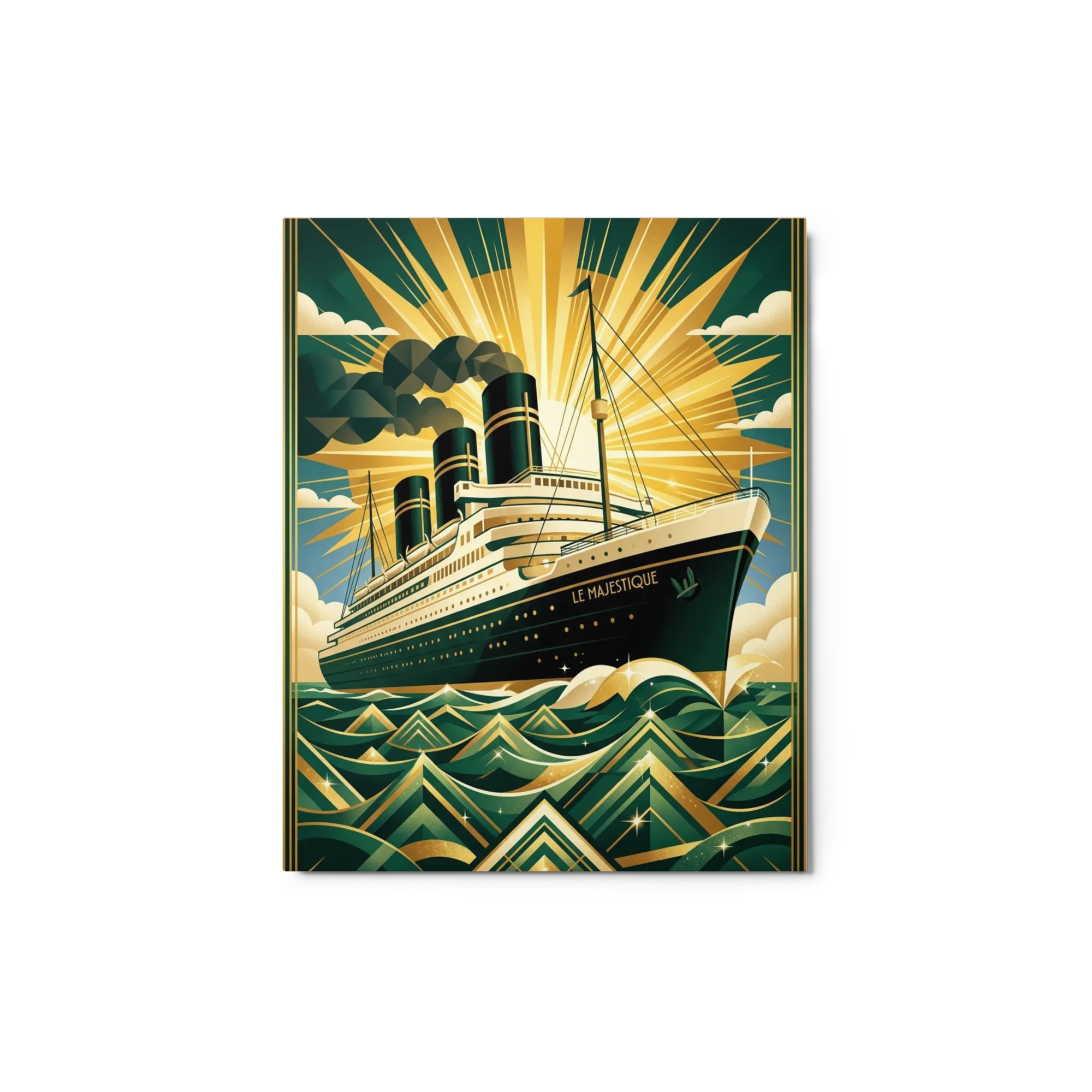
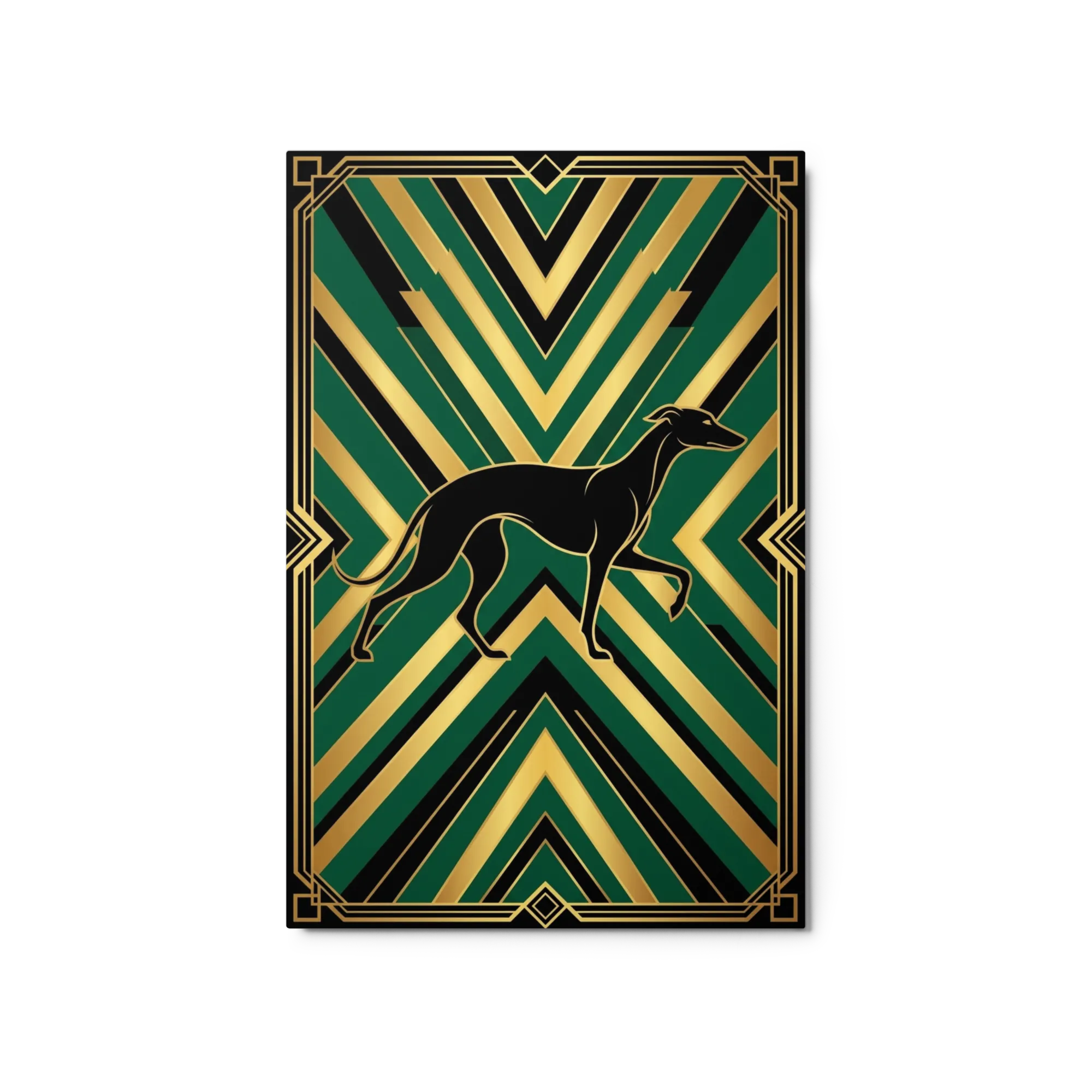
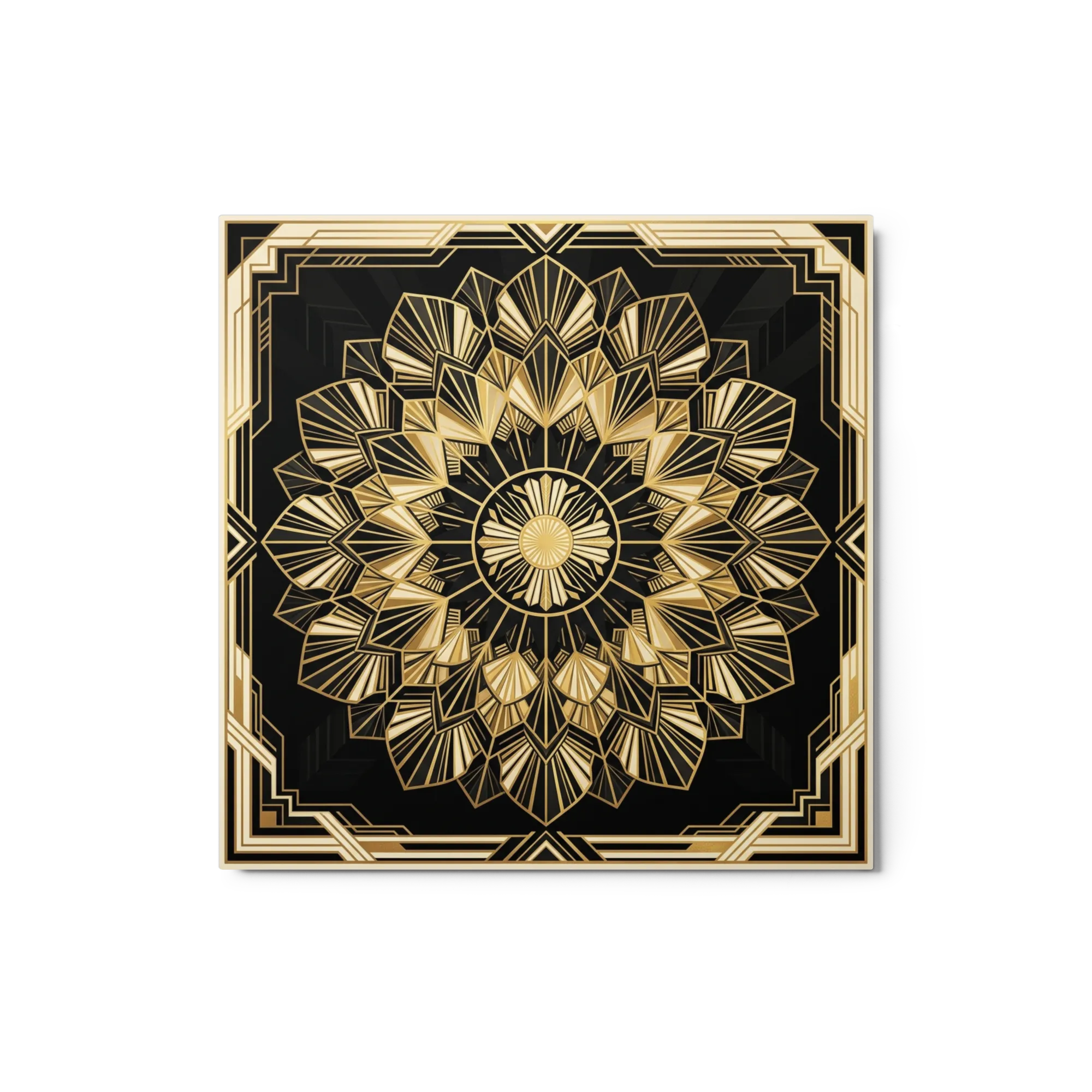
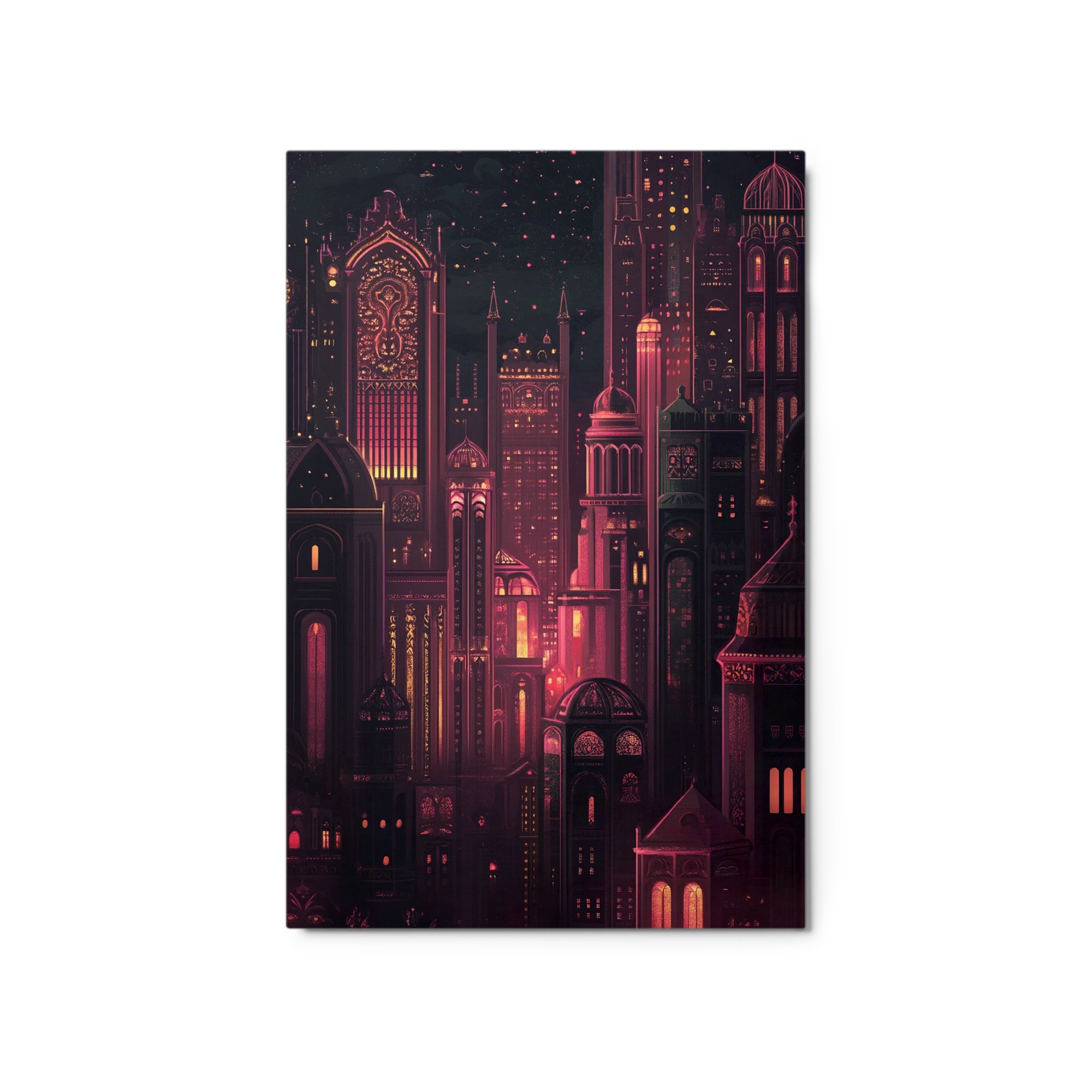
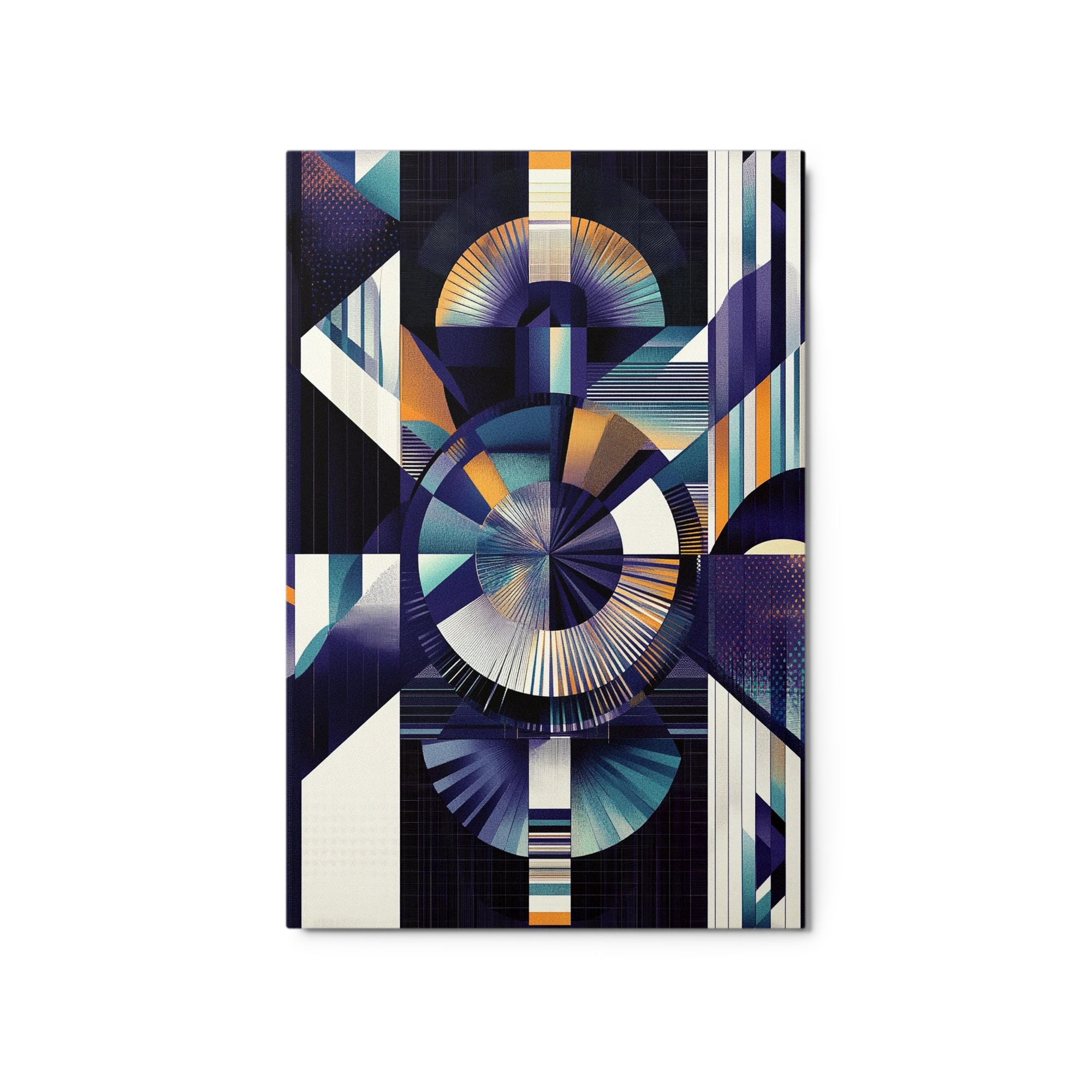
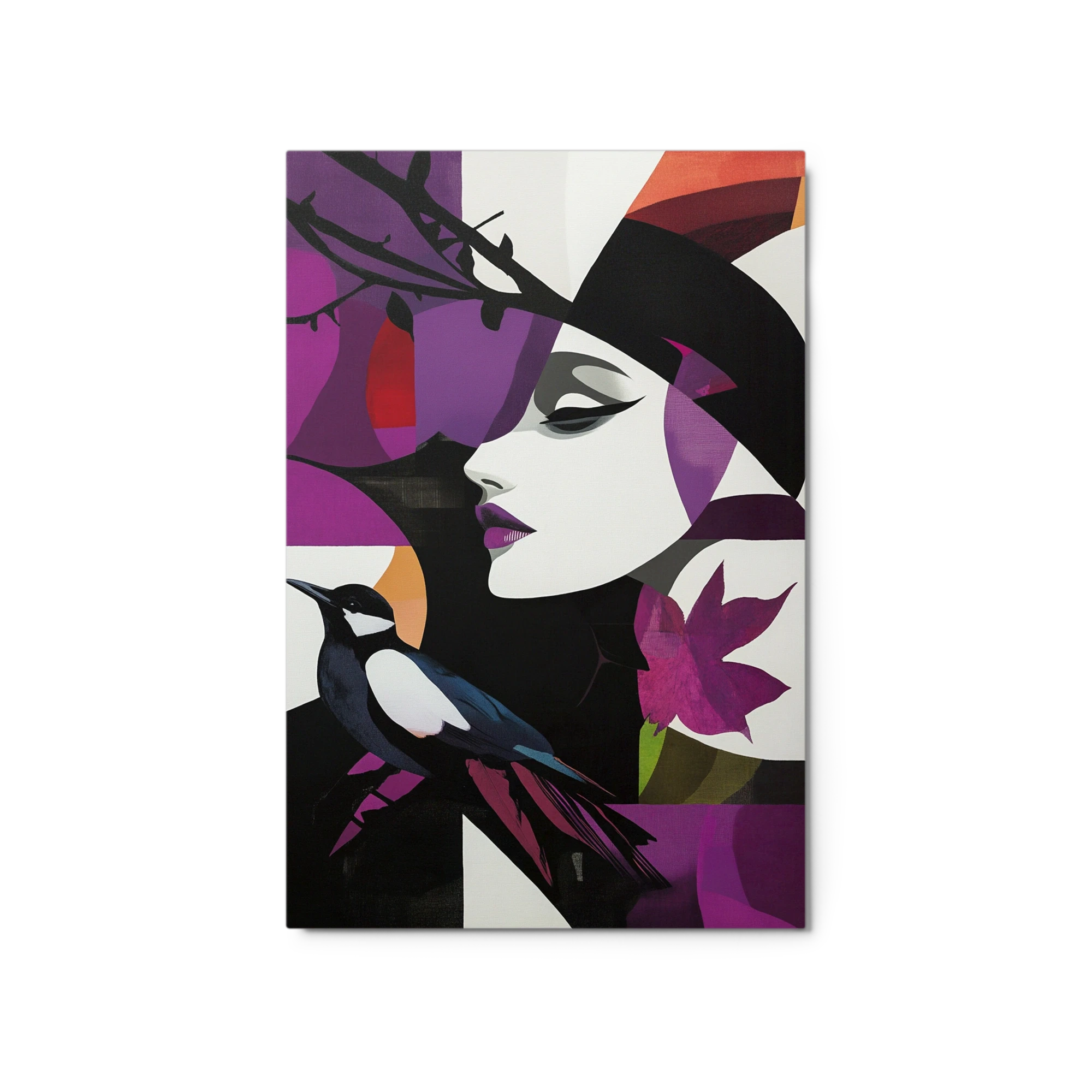
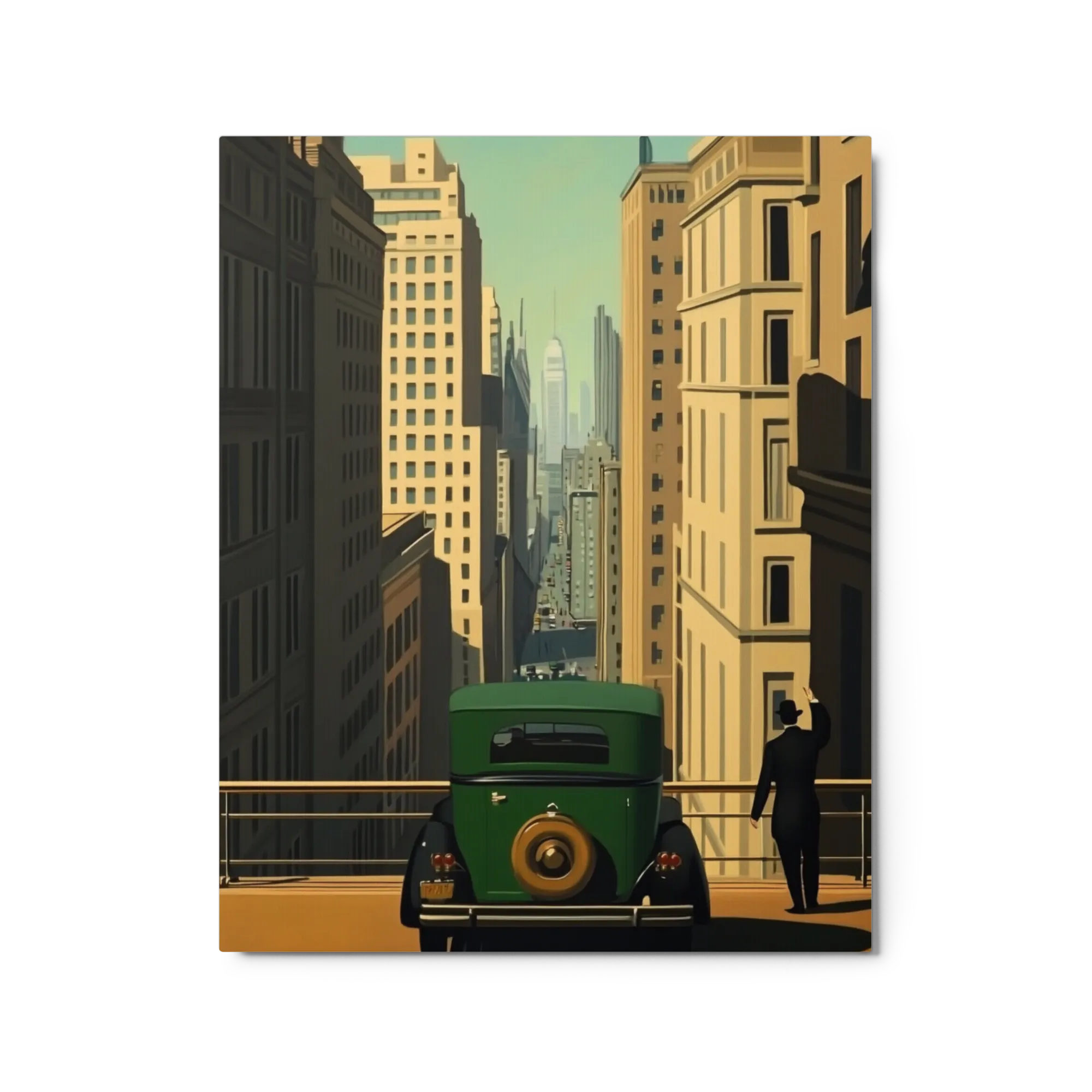
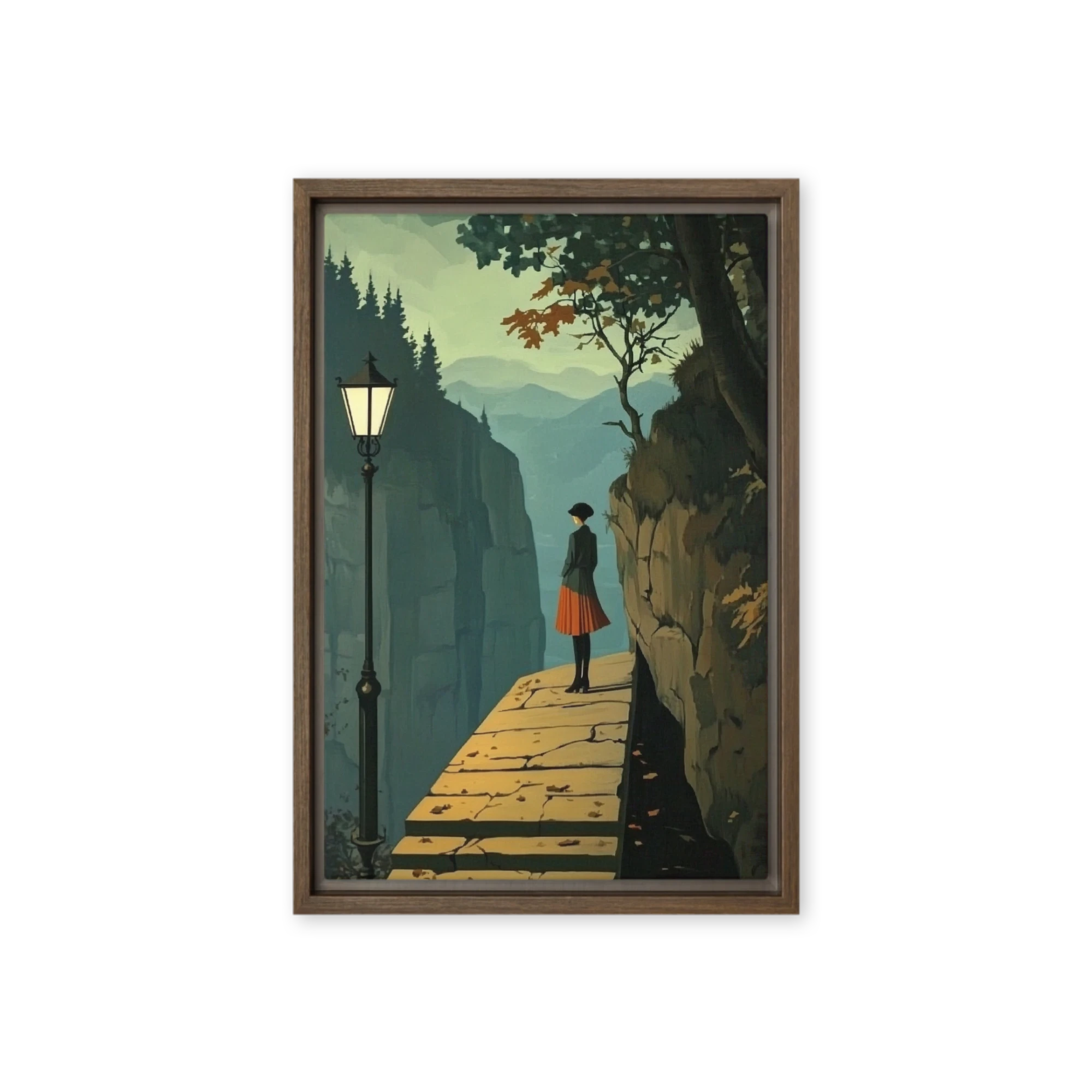
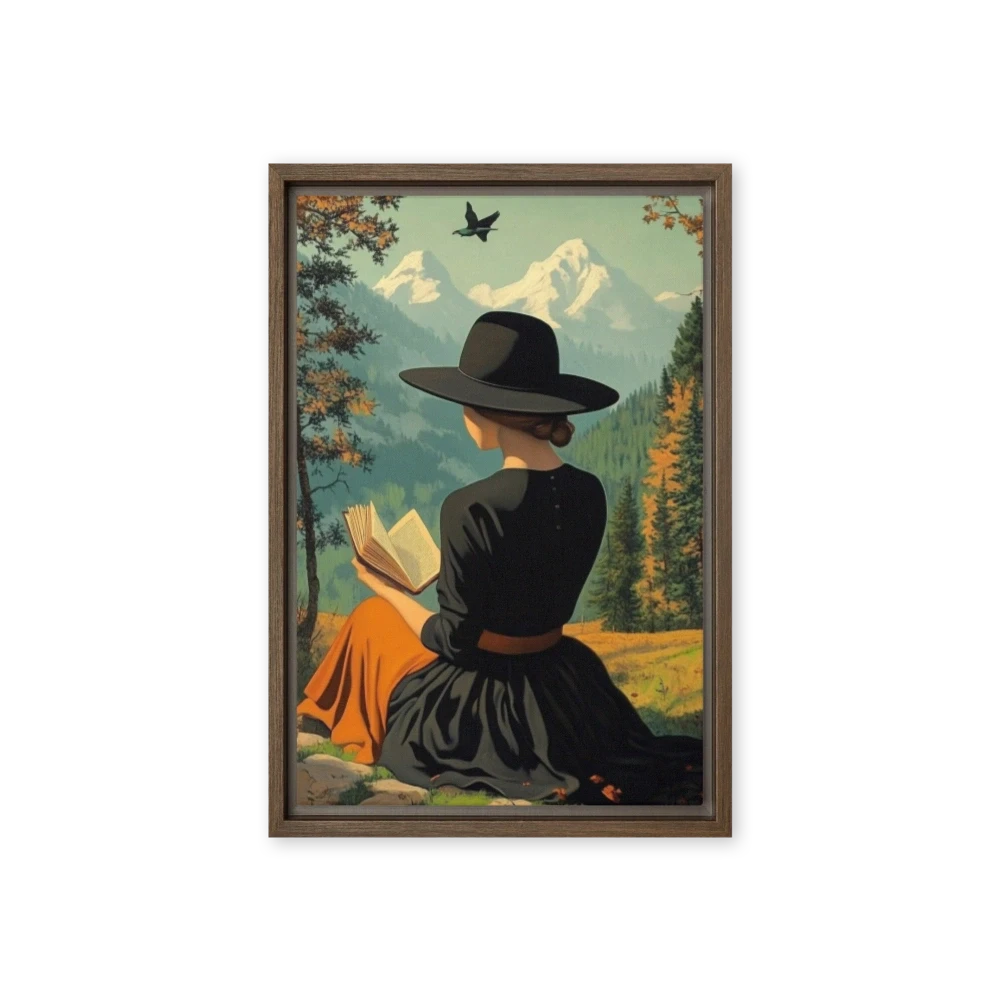
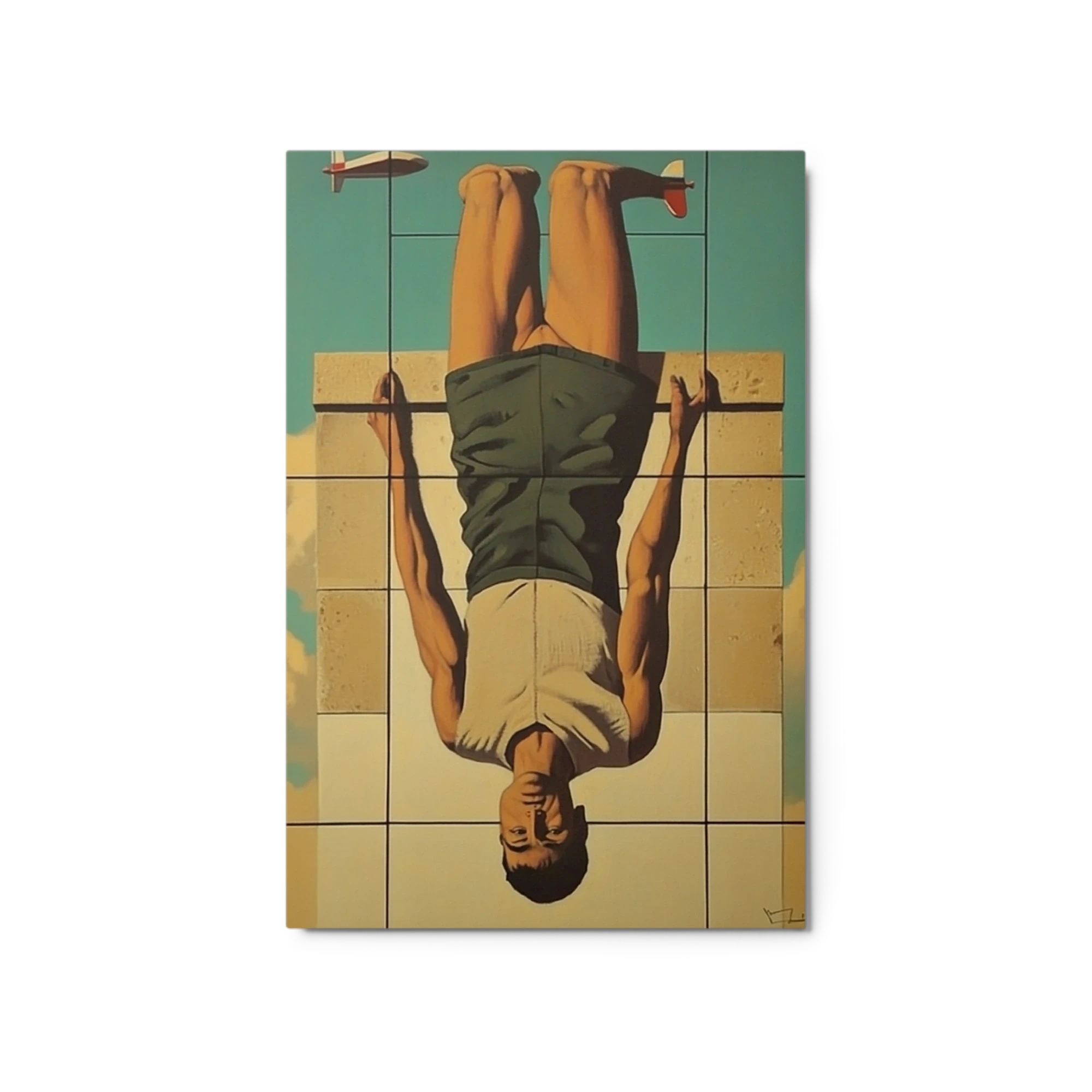
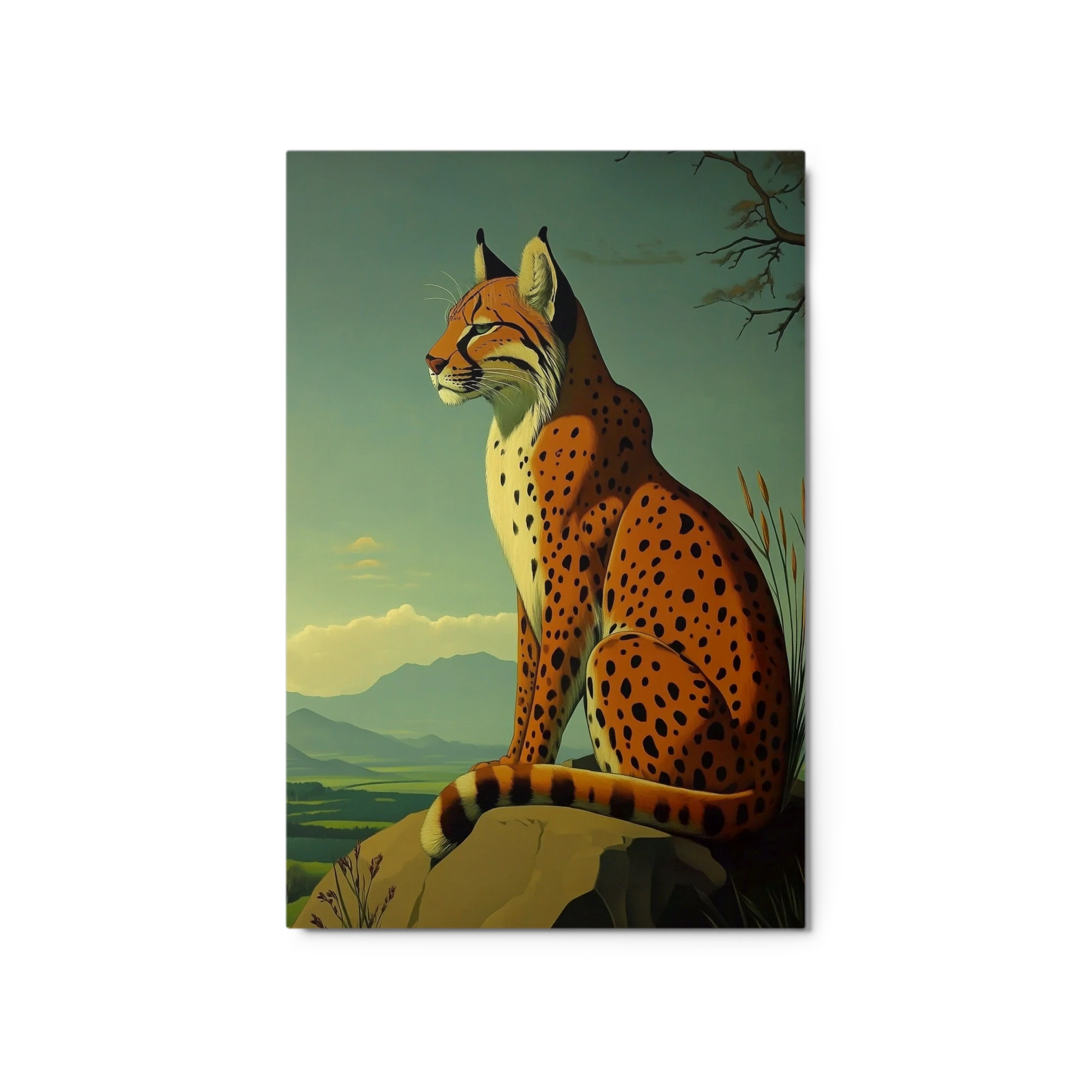
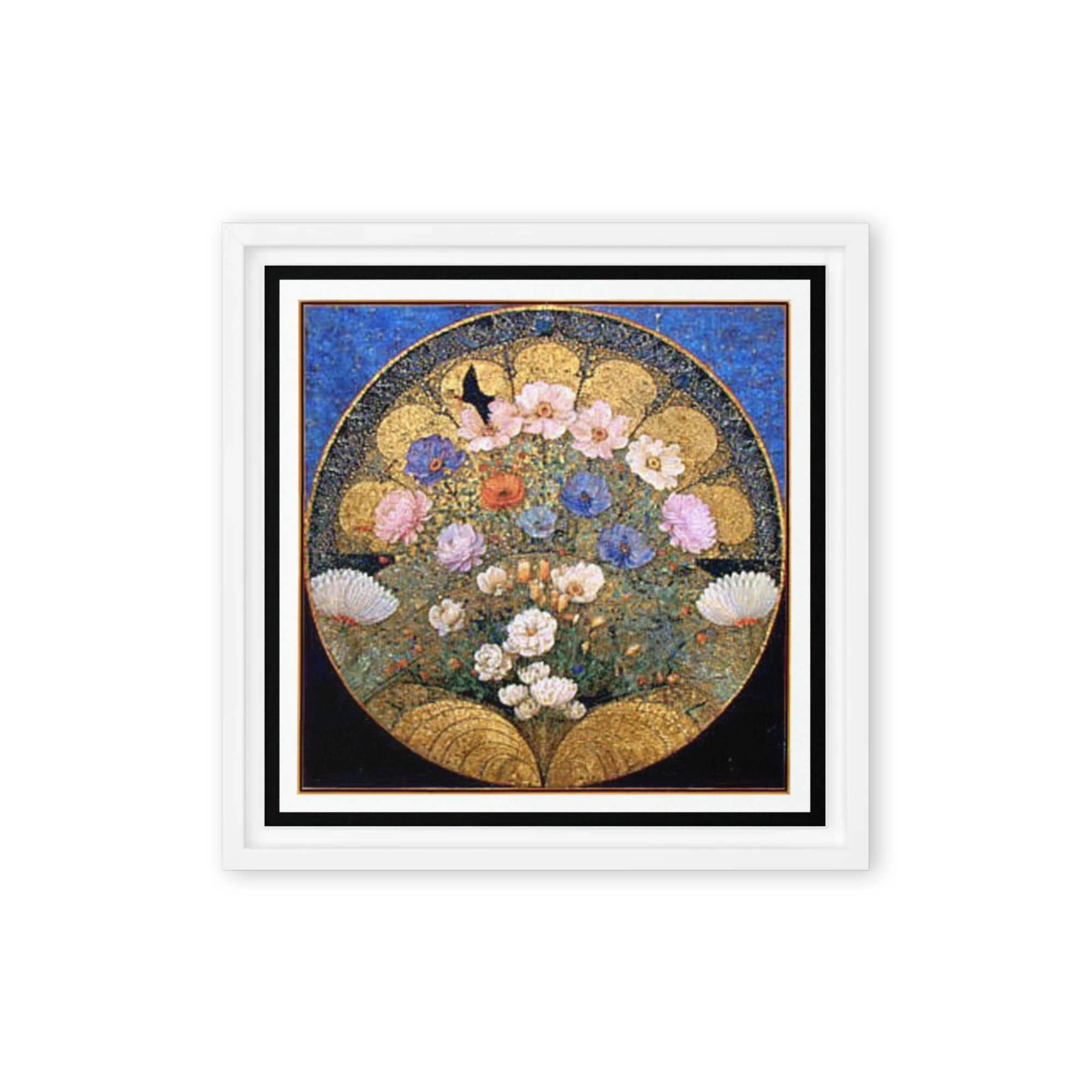
Art Deco wall art is the 1920s-30s in shorthand: stepped pyramid forms, fan motifs, sunbursts, gold-on-black palettes, stylised flora and fauna, elongated figures, and sleek period typography. The palette is black, gold, deep emerald, and cream, and the register is decidedly upscale — these are pieces that pair with brass, marble, mirrored furniture, and velvet, not Scandi pine and linen.
For a formal living room, dining room, or hotel-style bedroom, a single 24x36 art deco poster in a thin black or gold-detail frame anchors the wall and signals the rest of the room's register. Matched pairs of 18x24 work above a velvet sofa or in a Gatsby-style hallway. Our art deco wall art collection is distinct from art nouveau (we avoid organic whiplash curves) and from mid-century-modern (no warm-wood Atomic-Age palette) — the geometric glamour is the whole point.
Art Deco is geometric, symmetrical, and machined — stepped forms, fans, sunbursts, sleek type. Art Nouveau is organic, asymmetric, and naturalistic — whiplash curves, flowing florals, soft figures. They're sometimes confused but visually opposite; choose Deco for an upscale-modern register and Nouveau for a softer Belle Epoque feel.
Formal living rooms, dining rooms with brass or marble, hotel-style bedrooms, statement bathrooms, and entryways. Anywhere the existing materials already lean toward velvet, brass, marble, mirror, or dark wood — Art Deco amplifies that register. Less convincing in Scandi or farmhouse rooms.
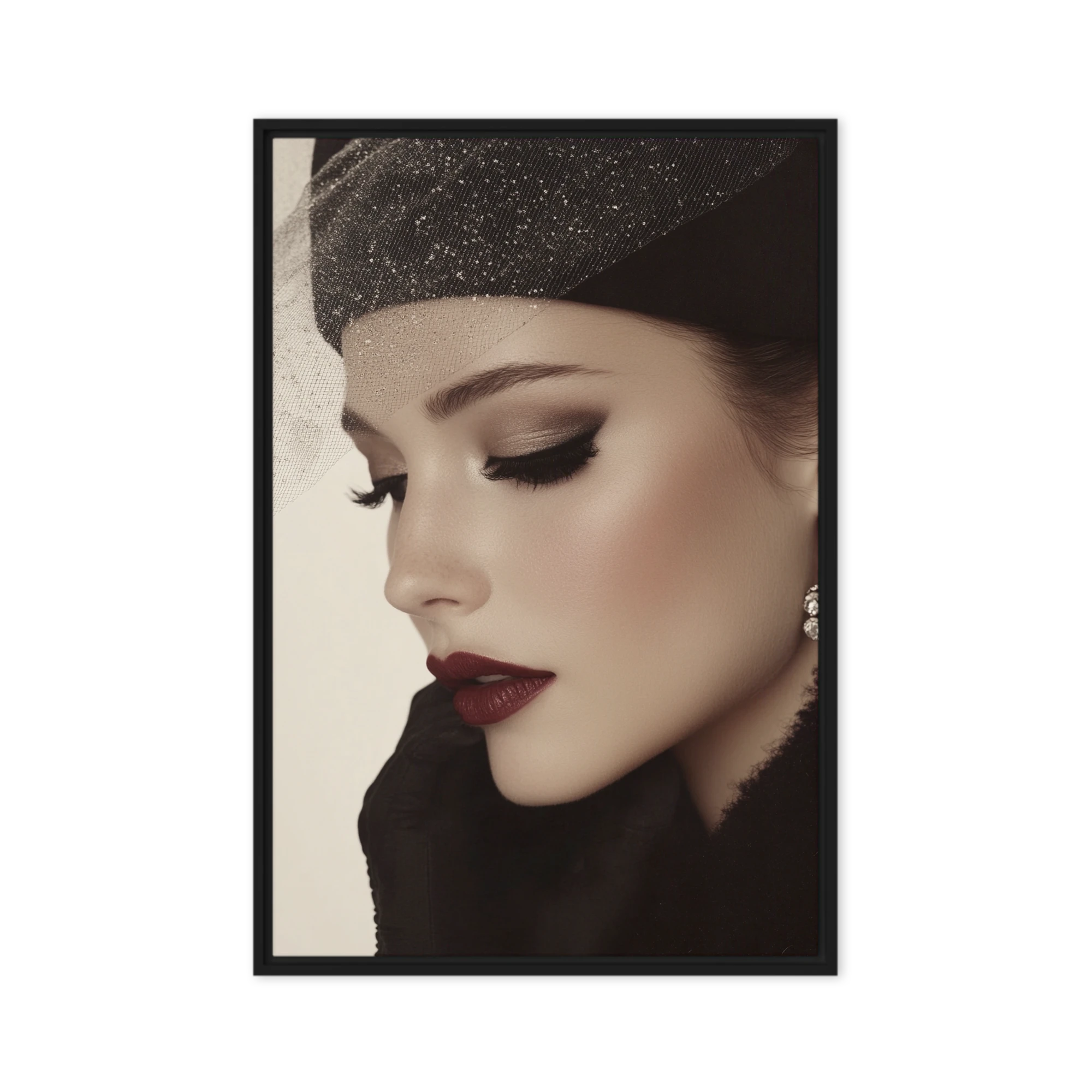
A thin black frame with no mat, or a thin black-and-gold frame, both read true to the period. Avoid heavy ornate gold frames (more Baroque than Deco) and natural-wood frames (the warmth clashes with the cool geometric register).
Yes — a single 24x36 Deco poster in a thin black frame is one of the cleanest ways to add character to an otherwise minimal modern apartment. The geometry plays well with contemporary clean lines, and the gold-and-black palette anchors rooms that would otherwise feel under-decorated.